Autonomous ground transport in crisis situations
Sweden’s rural communities and emergency preparedness efforts require new technological solutions to improve transport in challenging environments. To make this possible, regulatory frameworks need to be reviewed a
Project start
2026
Project budget SEK million
0.6
Project end
2029
Purpose
Many rural areas lack accessible transport services, resulting in a heavy reliance on private cars and making it difficult to provide commercially viable services. At the same time, these are precisely the areas where reliable transport is essential during emergencies.
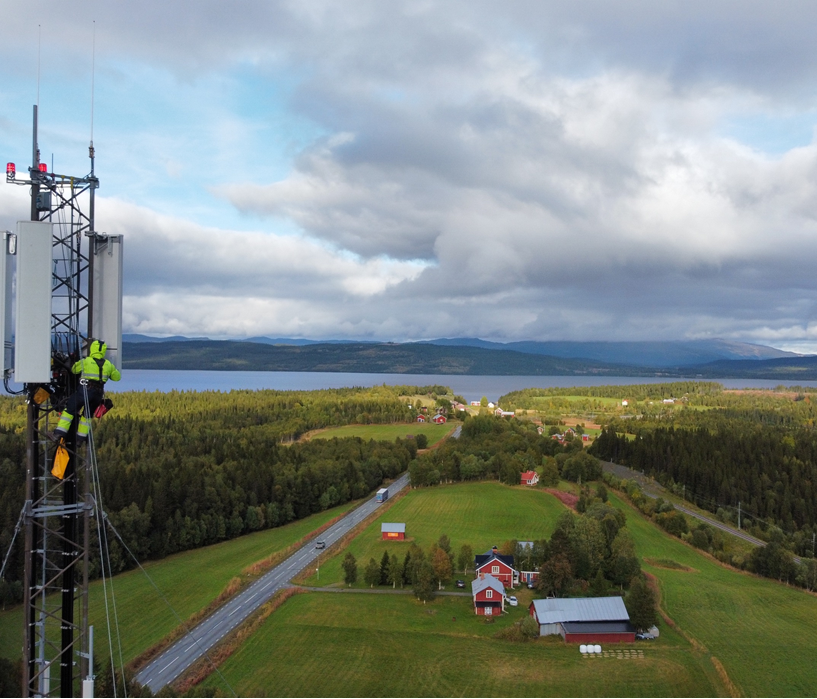
The project explores how a drone flying above an autonomous ground vehicle can provide situational awareness and share information with vehicles on the ground. This could enable transport services to operate even during snowstorms, floods and wildfires. The solutions have a dual use purpose, creating value in everyday life while strengthening preparedness for crises and armed conflict.
The regionally owned transport company Bussgods i Norr plans to commercialise services in this area as early as 2028. To make this possible, regulatory frameworks need to be reviewed and the development of these services must become commercially viable.
Project activities
The project is divided into four work packages covering service development, policy development, technology development including the demonstration of an autonomous swarm of ground and aerial vehicles, and communication and project management.
The demonstration aims to show that a commercial transport system can achieve a high level of reliability even under extremely challenging conditions.
Skellefteå Science City contributes to the development of adaptive regulatory frameworks and complementary services. We explore which regulations need to evolve to enable autonomous transport during emergencies and develop complementary services that strengthen the business case for establishing autonomous transport systems. This work is based on a specific use case and practical field trials.
Project partners
The project is coordinated by the Swedish National Road and Transport Research Institute (VTI), in collaboration with the Swedish Transport Administration (Trafikverket), LFV (Air Navigation Services of Sweden), Faculty of Engineering at Lund University (LTH), Umeå University, Volvo AB, Bussgods i Norr, Bolt, Skellefteå Airport City, Skellefteå Science City, Milrem Robotics (Sinrob Technologies), Earhart AB, Exadev (Totalförsvarsstiftelsen), Umeå Offroad & Import, PTEH, TuRe (Tavelsjö-Rödåbygdens utveckling), Swedish Defence University, Fyra Punkter, Initium, Åsele Municipality, Dorotea Municipality, Lycksele Municipality, Karlskoga Municipality, Nordluft Automation, Canoda Drone & Deacon, INAB, ICA Matboa, Promoteq and IUS Innovation.
Funded by
Contact
Innovation Manager

Share the article, copy the link